

Full Length Research Article
Microbial Contamination and Antibiotic Resistance in Food and Water: Assessing the Threat of Staphylococcus aureus in Lahore Metropolitan
Gulnaz Pervaiz*, Zahoor Qadir Samra, Amina Hussain, Aroosha Hussain, Fareeha Javaid
Adv. life sci., vol. 11, no. 2, pp. 368-374, May 2024
*– Corresponding Author: Gulnaz Pervaiz (gulnazpervaiz14@yahoo.com)
Authors' Affiliations
2. Department of Forensic Sciences, University of Health Sciences, Lahore – Pakistan
3. Department of Forensic Sciences, Collage of Criminal Justice, Naif Arab University for Security Sciences, Riyadh – Saudi Arabia
[Date Received: 30/07/2023; Date Revised: 14/02/2024; Date Available Online: 18/04/2024]
Abstract
Introduction
Methods
Results
Discussion
References
Abstract
Background: The research project in Lahore, Pakistan, seeks to detect S. aureus in drinking water, raw milk, and yogurt samples due to health concerns. S. aureus is a pathogenic bacterium with potential risks if present in food and water sources.
Method: In this study, 300 samples of raw milk, yogurt, and drinking water were collected in Lahore. The presence of S. aureus was determined through morphological, microscopic, and biochemical methods. The biochemical analysis included testing for specific features of S. aureus. Disk diffusion technology was employed to assess the antimicrobial susceptibility of the isolates, following the recommendations of the Clinical Laboratory Standards Institute. Molecular confirmation was achieved through 16S rRNA sequence analysis using universal and specific primers.
Results: The investigation uncovered that 6% of drinking water samples, 9% of yogurt samples and 58% of raw milk samples were tainted with S. aureus. These findings were further validated through 16S rRNA sequence analysis, affirming their reliability. S. aureus exhibited notable resistance rates, with 100% resistance to penicillin and 95% resistance to erythromycin. Conversely, resistance to ciprofloxacin and gentamicin was lower, at 10% and 5% each, indicating the potential efficacy of these antibiotics in treating S. aureus infections.
Conclusion: The study emphasizes the risk of S. aureus infection from raw milk consumption in Lahore, Pakistan, due to inadequate sanitary practices. It stresses the necessity of implementing stricter measures in dairy production and water treatment to ensure public safety and reduce multidrug-resistant bacteria prevalence. Continuous monitoring and preventive actions are vital for safeguarding public health.
Keywords: S. aureus; Antibiotic resistance; Food and water; Lahore, Pakistan; Sanitary measures
Introduction
Staphylococcus aureus, a gram-positive bacterium, has garnered recognition for its involvement in chronic illness epidemics [1]. Over the course of the past century, it has been linked to numerous hospital outbreaks, evolving to develop resistance against commonly used antibiotics. The precise mechanisms driving the onset of virulent disease outbreaks remain unclear. With its resistance to antibiotics, virulence mediated by toxins, and ability to invade host tissues, this microorganism presents a significant threat to human health, potentially causing a spectrum of diseases. S. aureus produces toxins referred to as staphylococcus enterotoxins (SEs), which play a crucial role in the development of various staphylococcal infections. These infections can impact not only the skin but also the mucous membranes, potentially resulting in severe conditions such as toxic shock syndrome and staphylococcal food poisoning. These toxins can provoke inflammatory responses in affected tissues, exacerbating symptoms and contributing to the severity of the illness [2].
As the primary cause of foodborne illness (FBD), S. aureus is responsible for an estimated 241,000 cases annually in the US [3]. Factors such as misdiagnosis, improper sample collection, and laboratory evaluation contribute to the prevalence of staphylococcal food poisoning (SFP) [4]. Moreover, healthcare providers’ neglect in addressing suspected FBD cases can complicate the confirmation process in laboratories [5, 6]. Additionally, there is currently no systematic monitoring of medical fecal specimens for the presence of S. aureus or its associated toxins [5, 7, 8].
Various food items, including cream, milk, pastries, butter, sausages, cheeses, salads, prepared food, egg products, and poultry, have been linked to SFP. The reasons for SFP occurrence can vary significantly between countries, possibly due to differences in eating habits. Nevertheless, contamination by human contact, coughing, or sneezing remains a primary source of food contamination [9]. Symptoms of staphylococcal food poisoning (SFP) typically manifest after a short incubation period and may include stomach pains, nausea, vomiting, and, in rare cases, diarrhea [9]. Apart from affecting humans, S. aureus is also pathogenic to animals, causing various illnesses such as udder infections in cows and infections in pigs and birds [10-12]. The transmission of S. aureus to food can occur through air, food contact surfaces, and dust. In certain cases, hospitalization may be required, particularly when toddlers, the elderly, or individuals with disabilities are affected [12]. Among the approximately 20 different types of SEs produced by S. aureus, the sea, seb, sec, and sed types are most commonly associated with SFP [13]. The aim of the current study is to isolate pathogenic S. aureus from drinking water and various food samples in the Pakistani metropolis of Lahore. The findings from this research may aid policymakers in implementing safety measures and establishing regulations to prevent water and foodborne infections. Additionally, the study could contribute to managing the spread of harmful illnesses caused by the consumption of water, unpasteurized milk, and its derivatives.
Methods
Collection of Specimens
Between February 2018 and January 2019, a total of 300 samples of food and drinking water were procured from various districts of Lahore, including north, east, west, and south Lahore. Among these, 75 samples were specifically obtained, comprising 25 each of drinking water, yogurt, and raw milk sourced from both tap water and dairy milk shops in each locality. All samples were meticulously collected in sterilized containers and promptly transferred to the laboratory in an icebox. Within 24 hours of collection, the samples underwent initial examination and were subsequently refrigerated for further analysis. The entire research endeavor took place within the research facilities of the University of the Punjab.
Preparation and Dilution of Samples
To process the samples, gradual dilutions were performed under sterile conditions within a laminar airflow hood. Each sample was meticulously labeled, and initial stock solutions were created by combining one milliliter of each sample with nine milliliters of peptone water. Subsequent dilutions were executed to achieve dilution factors of 10^-5. From these diluted solutions, 0.1 milliliter of each sample was spread evenly onto nutrient agar plates. These plates were subsequently incubated at 37 degrees Celsius for a duration of 24 hours.
Isolation and Identification of S. aureus
S. aureus was isolated using a selective medium known as mannitol salt agar (MSA). After streaking MSA from a nutrient plate containing S. aureus colonies, it was cultured at 37 degrees Celsius for 40 hours. After the isolation of bacterial strains on MSA, morphological, microscopic (gram staining), and biochemical assays (catalase, coagulase, oxidase, indole, urease, mannitol) Sambrook and Russell (2001) guidelines were followed to identify and characterize the strains [14].
Microscopic Identification of S. aureus by Gram Staining
Gram staining was performed to create a smear from the isolated culture on a clean glass slide. After adding a single drop of water on the glass slide, pure culture bacteria of S. aureus were introduced and gently mixed. The smear was then air-dried or fixed with a hot flame. The slide was sequentially rinsed with crystal violet, gram iodine, decolorizing agent, and safranin. After air-drying, the gram-stained slide was examined under a 100X lens with oil immersion.
Biochemical Tests for S. aureus Identification
A range of biochemical assays were carried out to validate the existence of S. aureus. In the Catalase test, 3% H2O2 was applied to a slide, followed by the introduction of 10 µl of overnight culture derived from a single colony extracted from the agar plate. The Oxidase test employed filter paper saturated with a 1% solution of tetramethyl-p-phenylenediamine dihydrochloride as the reagent. Additionally, coagulase, urease, indole, and mannitol tests were executed using tailored culture media and specific incubation parameters.
Evaluation of Antimicrobial Sensitivity
The antimicrobial susceptibility of the isolates was evaluated using disk diffusion technology, in accordance with the guidelines outlined by the Clinical Laboratory Standards Institute [5]. The antimicrobial agents assessed comprised gentamicin, amoxicillin, tetracycline, penicillin, erythromycin, and ciprofloxacin. The zones of inhibition, measured in millimeters, were assessed twice and categorized as either resistant or susceptible following CLSI recommendations.
Molecular Identification and Sequence Analysis
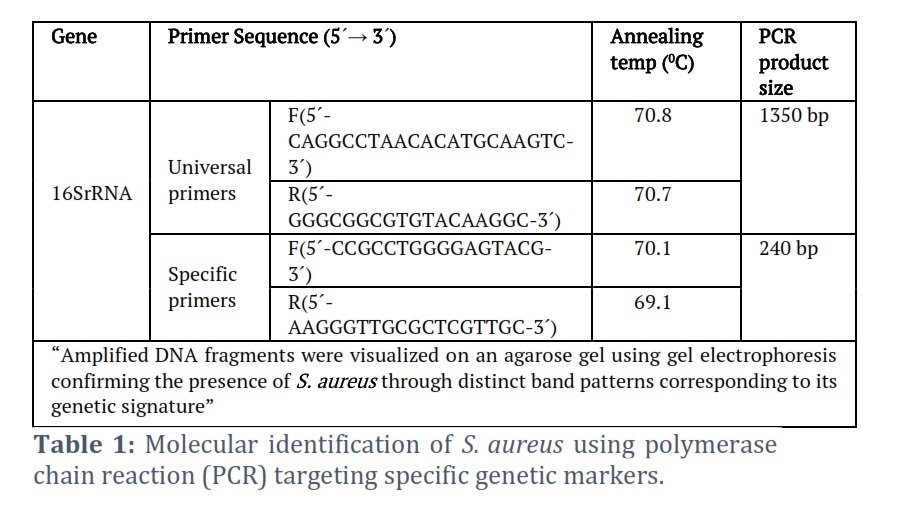
DNA extraction was carried out utilizing the GeneJET Genomic DNA purification kit from Thermo Scientific, adhering to the provided guidelines. The concentration of eluted DNA was assessed using UV-spectrophotometry at 260 nm. Polymerase chain reaction (PCR) was employed with both universal and specific primers to amplify the 16SrRNA gene (Table 1), followed by visualization of the amplified products through gel electrophoresis on a 1% agarose gel. Subsequently, the PCR products underwent sequencing, and sequence homology was determined utilizing BLASTn.
Statistical Analysis
The assessment of data was conducted using SPSS software version 21.0. Descriptive statistical methods, including frequency and percentage analysis, were employed to evaluate the occurrence of S. aureus in both water and food samples.
Results
Frequency Analysis of S. aureus Infection in Food and Water Specimens
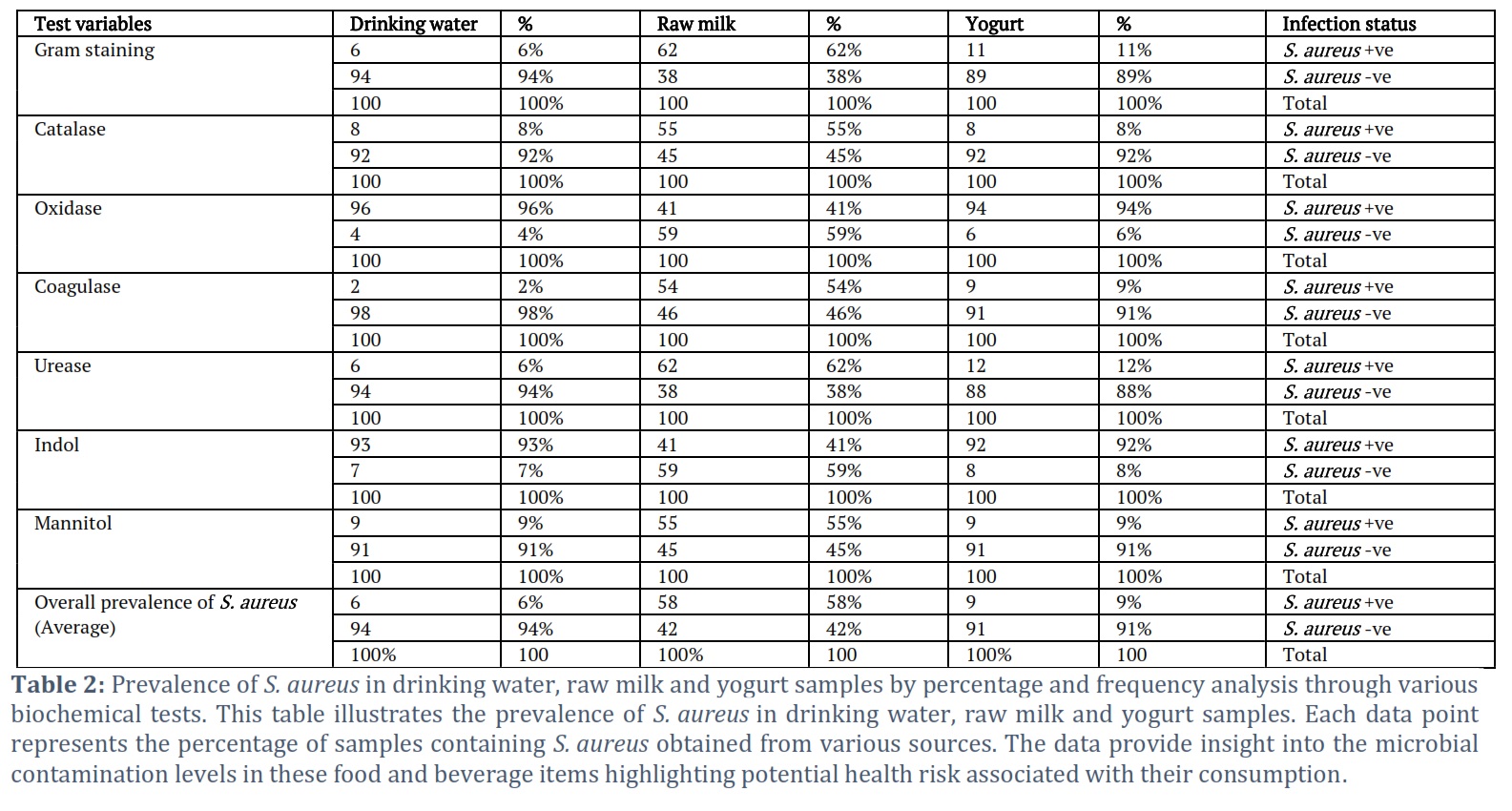
The investigation into the occurrence of S. aureus in water and food samples collected across various regions of Lahore employed seven distinct diagnostic methodologies (Table 2). On nutrient agar plates, colonies of S. aureus displayed a characteristic smooth, rounded, and shiny morphology. The employment of mannitol salt agar (MSA) as a selective medium aided in the detection of S. aureus, evidenced by the development of circular, yellow colonies.
Gram Staining and Biochemical Tests
The gram staining method was utilized to differentiate between the gram-positive (G+) and gram-negative (G–) characteristics of S. aureus. Among the 300 samples analyzed, 6 from drinking water, 62 from raw milk and 11 from yogurt were identified as gram-positive. Furthermore, the catalase activity of S. aureus, which facilitates the decomposition of hydrogen peroxide (H2O2) into water and oxygen, was evaluated to ascertain its aerobic nature. Among the 100 samples tested in each group, 8 from drinking water, 55 from raw milk and 8 from yogurt exhibited catalase positivity, evidenced by the formation of oxygen gas bubbles upon the addition of H2O2 to a test tube containing the S. aureus infected solution.
Oxidase Test
To identify the presence of the cytochrome oxidase enzyme, an oxidase test was conducted. Results revealed a lack of oxidase production by S. aureus, with 95 from drinking water, 41 samples from raw milk and 94 from yogurt testing positive for the bacterium.
Coagulase Activity
Coagulase activity was assessed to identify S. aureus-positive samples. Among the tested samples, 2 from drinking water, 54 from raw milk and 9 from yogurt exhibited positive coagulase activity, evident through the clotting phenomenon observed in test tubes.
Urease Activity
S. aureus was characterized by measuring urease activity, an enzyme that converts urea into ammonia and carbon dioxide. Results indicated that 6 from drinking water, 12 samples from raw milk and 39 from yogurt tested positive for S. aureus.
Indole Test and Mannitol Fermentation
For S. aureus detection, the indole test and mannitol fermentation were conducted. The indole test revealed negativity in 90 drinking water samples, 41 raw milk samples and 92 yogurt samples. Conversely, S. aureus demonstrated mannitol fermentation, leading to a color change in the phenol red medium from red to yellow. This was observed in 9 drinking water, 55 raw milk and 9 yogurt samples.
Overall Infection and Molecular Identification
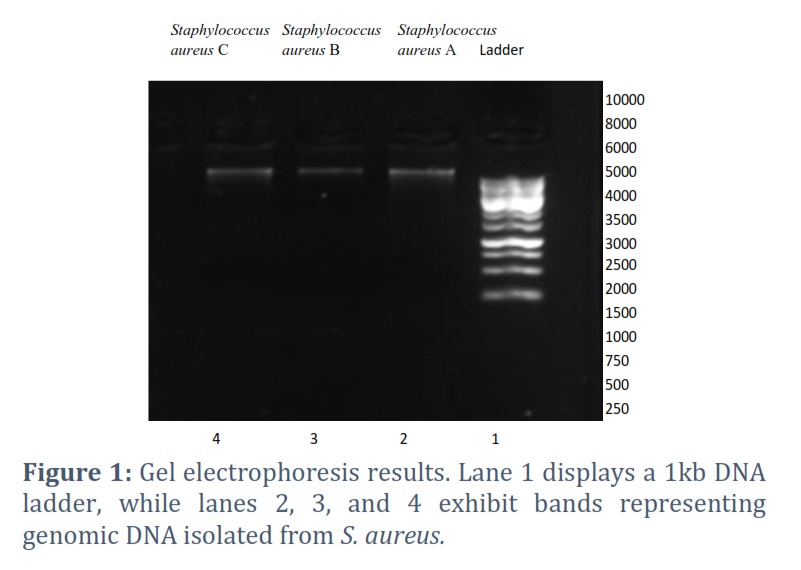
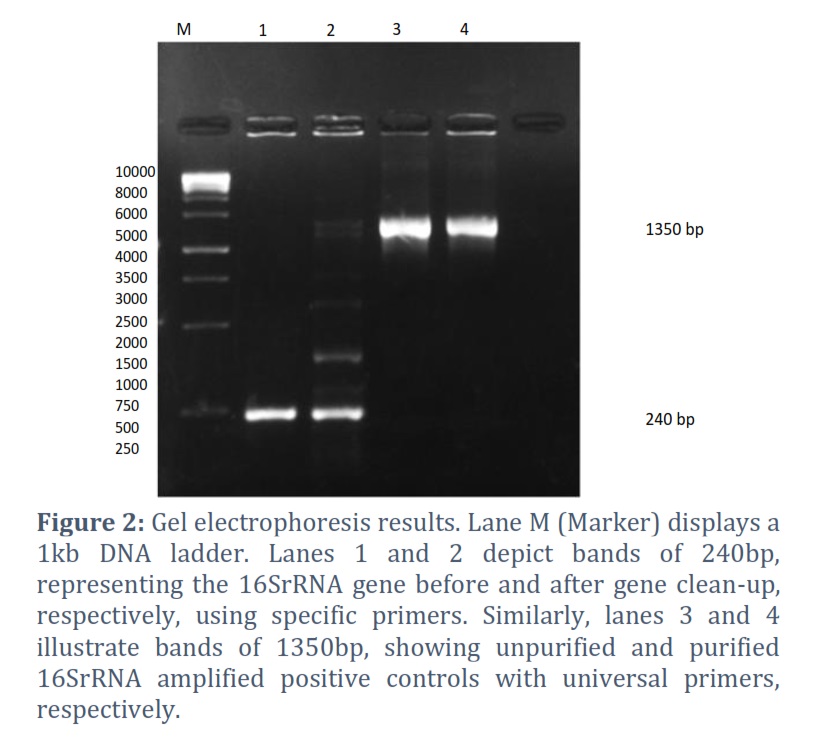
The prevalence of S. aureus infection across the collected samples was determined through an amalgamation of biochemical tests, revealing rates of 6% in drinking water, 58% in raw milk and 9% in yogurt out of the total 300 samples (Table 2). These findings were substantiated by conducting partial sequence analysis of the 16SrRNA. Among the 73 isolates identified, one particular isolate (G17) exhibiting positive cultural, morphological, and biochemical characteristics for S. aureus underwent 16SrRNA partial sequencing, with subsequent extraction of its genomic DNA (Fig. 1). The sequence of isolate G17 displayed a 99.52% similarity to known S. aureus sequences using specific primers, and a 96% similarity with universal primers (Fig. 2).
Antibiotic Resistance Pattern
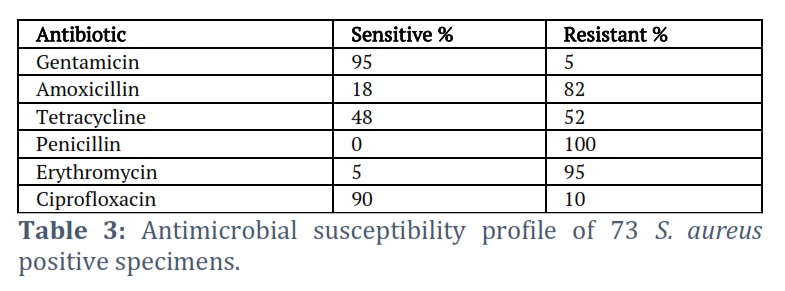
The study further elucidated diverse patterns of resistance to six antibiotics. Examination of the antibiogram revealed the highest levels of resistance to penicillin (100%), followed by erythromycin (95%), amoxicillin (82%), and tetracycline (52%). In contrast, the least resistance was observed against ciprofloxacin (10%) and gentamicin (5%) (Table 3).
Figures & Tables
Milk is a vital source of nutrition, and ensuring its safety is crucial for public health. If cows and buffaloes have mastitis, a condition where the udder is inflamed, it can lead to contamination of milk with a large quantity of gram-positive bacteria. To prevent this, milk is often sterilized in the udder before consumption [16]. However, food items, including milk, can also serve as a breeding ground for microorganisms, leading to food spoilage and potential foodborne diseases [17].
The significance of identifying foodborne pathogens cannot be emphasized enough, as it plays a pivotal role in devising effective strategies for their eradication. In our investigation, we employed a blend of biochemical, cultural, and 16SrRNA sequence analysis techniques to detect these pathogens [18, 19]. We collected a total of 300 samples of drinking water, yogurt, and milk from various locations across Lahore. Our findings revealed that 6% of drinking water specimens, 58% of raw milk specimens and 9% of yogurt specimens tested positive for S. aureus.
Access to clean water is paramount for public health [31]. In Pakistan, water resources suffice to meet the drinking needs of seventy-nine percent of the population, with a significant portion sourced from groundwater [32]. Nevertheless, our investigation uncovered the presence of S. aureus in drinking water, consistent with findings from studies conducted in Karachi [33, 34] and other global regions such as Nigeria, where 10.8% of staphylococci were detected in drinking water [35]. Furthermore, notably higher proportions of predominant staphylococcal species (68.75%) have been documented in India’s Uttarakhand region [36], alongside reports of S. aureus occurrence in drinking water in Andhra Pradesh [37].
These findings align with prior research indicating the presence of pathogens in raw milk [20-22]. The elevated prevalence of S. aureus in raw milk compared to earlier studies [23, 24] may be attributed to suboptimal hygiene practices during milk processing, contamination from unclean teats, and the utilization of unpasteurized milk transport equipment, all of which contribute to S. aureus contamination.
In terms of yogurt, the current overall prevalence of S. aureus stands at 9%, aligning with earlier observations [25-28]. However, there have been instances of higher S. aureus prevalence, reaching percentages of 40% and 61.70% in food products, respectively [29, 30]. This variability may stem from differences in diagnostic methodologies and geographic factors influencing the assessment of S. aureus prevalence in raw milk and its derivatives.
The sequencing outcomes of the S. aureus isolate G17 exhibited varying identity percentages when analyzed with 16S rRNA-specific and universal primers. Notably, the specific primer demonstrated a higher identity (99.52%), whereas the universal primer displayed a slightly lower identity (96%) to the known genomes of S. aureus strains, in line with previous research findings [38]. These primers have been successfully utilized in past studies for the identification of S. aureus isolates from food samples based on their 16S rRNA genes [39].
Additionally, the investigation evaluated the antibiotic resistance profiles of S. aureus isolates. The results correspond with findings from other published studies, indicating susceptibility to ciprofloxacin, gentamicin, and amoxicillin, alongside resistance to erythromycin and penicillin [24, 40, 23]. Nonetheless, Thaker et al., documented differing antibiotic resistance patterns concerning tetracycline [40], while Begum et al., observed distinct resistance patterns against ampicillin [41].
Foodborne pathogens, including S. aureus, present a formidable challenge to global public health initiatives. Our study has furnished valuable insights into the prevalence of S. aureus in diverse food and water samples from Lahore. Results indicate that 6% of drinking water samples, 58% of raw milk samples and 9% of yogurt samples tested positive for S. aureus. The heightened occurrence of S. aureus in raw milk may stem from inadequate hygiene practices during processing, storage, and handling of unpasteurized milk, underscoring the critical need for stringent hygiene measures across the milk supply chain to ensure consumer safety. Furthermore, our findings suggest that multidrug-resistant S. aureus strains isolated from drinking water could potentially transmit their resistance traits to other gastrointestinal bacteria in consumers, potentially prolonging treatment duration and elevating mortality rates in case of bacterial contamination. Investigating pathogen presence in unpasteurized milk, dairy products, and drinking water remains crucial for assessing product safety and devising innovative processing techniques. Continuous surveillance and monitoring of foodborne pathogens like S. aureus are indispensable for protecting public health and averting potential foodborne illness outbreaks.
In summary, our study underscores the imperative of addressing foodborne pathogens in food and water supplies. By implementing effective measures to prevent contamination and bolster safety protocols, we can mitigate the risks posed by S. aureus and other foodborne pathogens, thereby safeguarding public health and well-being.
Conflict of Interest
The authors declare that there is no conflict of interest.
Conceptualization; GP (Gulnaz Pervaiz) and ZHQ, Execution of experiments and curation of data; GP (Gulnaz Pervaiz), Drafting of manuscript; GP (Gulnaz Pervaiz), Reviewing and editing ZHQ, Software; AH (Amina Hussain), Resources; FJ and AH (Aroosha Hussain), Supervision; ZHQ. All authors approved the manuscript.
References
- Whiting R, Sackitey S, Calderone S, Morely K, Phillips J. Model for the survival of Staphylococcus aureus in nongrowth environments. International Journal of Food Microbiology, (1996); 31(1-3): 231-243.
- Ortega E, Abriouel H, Lucas R, Gálvez A. Multiple roles of Staphylococcus aureus enterotoxins: pathogenicity, superantigenic activity, and correlation to antibiotic resistance. Toxins, (2010); 2(8): 2117-2131.
- Scallan E, Hoekstra RM, Angulo FJ. Foodborne illness acquired in the United States—major pathogens. Emergency Infectious. Diseases, (2011); 17(1): 7–15.
- Argudin MA, Mendoza MC, Rodicio MR. Food poisoning and Staphylococcus aureus enterotoxins. Toxins, (2010); 2(7):1751–1773.
- Bennett SD, Walsh K A, Gould LH. Foodborne disease outbreaks caused by Bacillus cereus, Clostridium perfringens, and Staphylococcus aureus—United States, 1998–2008. Clinical. Infectious. Diseases, (2013); 57(3): 425–433.
- Scallan E, Jones TF, Cronquist A. Factors associated with seeking medical care and submitting a stool sample in estimating the burden of foodborne illness. Foodborne Pathogen Diseases, (2006); 3(4): 432–438.
- Thielman NM, Guerrant RL. Acute infectious diarrhea. The New England Journal of Medicine, (2004); 350(1): 38–47.
- Guerrant RL, Van Gilder T, Steiner TS, Thielman NM, Slutsker L, Tauxe RV, Hennessy T, Griffin PM, DuPont H, Sack RB, Tarr P, Neill M, Nachamkin I, Reller LB, Osterholm MT, Bennish ML, Pickering LK; Practice guidelines for the management of infectious diarrhea. Clinical. Infectious. Diseases, (2001); 32(3): 331–351.
- Le Loir Y, Baron F, Gautier M. Staphylococcus aureus and food poisoning. Genetics and Molecular Research, (2003); 2(1): 63–76.
- Miles H, Lesser W, Sears P. The economic implications of bioengineered mastitis control. Journal of Dairy Sciences, (1992); 75(2): 596–605.
- Fitzgerald JR, Monday SR, Foster TJ, Bohach GA, Hartigan PJ, Meaney WJ, Smyth CJ. Characterization of a putative pathogenicity island from bovine Staphylococcus aureus encoding multiple superantigens. Journal of Bacteriology, (2001); 183(1): 63–70.
- Kenny K, Reiser RF, Bastida-Corcuera FD, Norcross NL. Production of enterotoxins and toxic shock syndrome toxin by bovine mammary isolates of Staphylococcus aureus. Journal of Clinical Microbiology, (1993); 31(3): 706–707.
- Kamboj D, Nema V, Pandey A, Goel A, Singh L. Heterologous expression of staphylococcal enterotoxin B (seb) gene for antibody production. Electronic Journal of Biotechnology, (2006); 9(5): 1-4.
- Sambrook J, Russel DW. Molecular cloning, A laboratory manual. 3rd edn. (2001); CSHL, USA
- CLSI, Clinical and Laboratory Standards Institute. Per¬formance standards for antimicrobial susceptibility test¬ing. Twenty-Fourth Informational Supplement. (2014); CLSI doc-ument M100-S24. Wayne, Pennsylvania, USA.
- Holm C, Jespersen L. A flow-cytometric gram staining technique for milk associated bacteria. Applied And Environmental Microbiology, (2003); 69(5): 2857-2863.
- Altekruse S, Hyman F, Klontz K, Timbo B, Tollefson L. Food borne bacterial infections in individuals with the human immunodeficiency virus. South Medical Journal, (1994); 87(2): 69-73.
- Khan JA, Rathore RS, Khan S, Ahmad I. In vitro detection of pathogenic Listeria monocytogenes from food sources by conventional, molecular and cell culture method. Brazil Journal of Microbiology, (2013); 44(3): 751-758.
- Singh J, Virender KB, Sunita G. Simultaneous detection of Listeria monocytogenes and Salmonella spp. in dairy products using real time PCR-melt curve analysis. Journal of Food Science Technology, (2012); 49(2): 234-239.
- Pourhassan M, Taravat-Najafabadi ART. The spatial distribution of bacterial pathogens in raw milk consumption on Malayer City, Iran. Electronic Medical Journey, (2011); 12(1): 2-10.
- Daka D, G/silassie S, Yihdego D. Antibiotic-Resistance Staphylococcus aureus isolated from cow’s milk in the Hawassa area, South Ethiopia. Annals of Clinical Microbiology and Antimicrobials, (2012); 11: 26.
- Donkor ES, Aning KG, Quaye J. Bacterial contamination of informs marketed raw milk in Ghana. Ghana Medical Journal, (2007); 41(2): 58-61.
- Jahan M, Rahman M, Parvej MS, Chowdhury SMZH, Haque ME, Talukder MAK, Ahmed S. Isolation and characterization of Staphylococcus aureus from raw cow milk in Bangladesh. Journal of Advance Veterinary Animal. Research, (2015); 2(1): 49-55.
- Patel RK, Kumar R, Savalia CV, Patel NG. Isolation of Staphylococcus aureus from raw cattle milk and their drug resistance pattern. International Journal of Current Microbiological Applied Sciences, (2018); 7(2):836-840.
- Singh P, Prakash A. Isolation of Escherichia coli, Staphylococcus aureus and Listeria monocytogenes from milk products sold under market conditions at Agra region. Acta Agriculturae. Slovenica, (2008); 92(1): 83-88.
- Ekici K, Bozkurt H, Isleyici O. Isolation of pathogens from raw milk of different milch animals. Pakistan Journal of Nutrition, (2004); 3(3): 161-162.
- Shah NM, Kher HN, Dholakia PM, Simaria MB. Studies on Staphylococci in udder of cattle. Indian Veterinary Journal, (1985); 62: 458-460.
- Addis M, Pal M, Kyule N. Isolation and identification of Staphylococcus species from raw bovine milk in Debre Zeit, Ethiopia. Veterinary Research, (2011); 4(2): 45-49.
- Zakary EM, Nassif MZ, Mohammed GM. Detection of Staphylococcus aureus in bovine milk and its product by real time PCR assay. Global Journal of Biotechnology and Biochemistry, (2011); 6(4): 171-177
- Lingathurai S, Vellathurai P. Bacteriological quality and safety of raw cow milk in Madurai, South India. Bangladesh Journal of Scientific and Industrial Research, (2013); 48(2), 109–114.
- Amouei A, Miranzadeh MB, Shahandeh Z, Taheri T, Asgharnia AH, Akbarpour S. A Study on the microbial quality of drinking water in rural areas of Mazandaran province in North of Iran. Journal of Environmental Protection, (2011); 3(7): 605-609.
- Ahmad B, Liaquat M, Ali J, Bashir S, Mohammad S, Abbas S, Hassan S. Microbiology and evaluation of antibiotic resistant bacterial profiles of drinking water in Peshawar, Khyber Pakhtunkhwa. World Applied Sciences Journal, (2014); 30(11): 1668- 1677.
- Khatoon A, Pirzada ZA. Bacteriological quality of bottled water brands in Karachi, Pakistan. Biologia (Bratislava), (2010); 56(1-2):137-43.
- Yousuf FA, Siddiqui R, Khan NA. Survey of gram negative and gram positive bacteria in drinking water supplies in Karachi, Pakistan. British Microbiology Research Journal, (2014); 4(6): 592-597.
- Taura DW, Hassan IA. Bacteriological examination of households’ drinking water in some local Government areas of Kano state, Nigeria. International Research Journal of Pharmacy, (2013); 3(6): 1-96.
- Sood A, Pandey P, Bisht S, Sharma S. Anthropogenic activities as a source of high prevalence of antibiotic resistant Staphylococcus aureus in the river Ganga. Applied Ecology and Environmental Research, (2014);12(1): 33-48.
- Laxmi Sowmya K, Sandhya Deepika D, Atluri JB. Quality assessment of drinking water from Kondiba an agency area, Andhra Pradesh. Research Journal of Pharmaceutical, Biological and Chemical Sciences, (2013); 4(3): 190-199.
- Kusumaningrum HD, Handayani L, Novrianti R. Partial sequencing of 16S rRNA gene of selected Staphylococcus aureus isolates and its antibiotic resistance. Media Peternakan, (2016); 39(2):67-74
- Lee YD, Moon BY, Park JH, Chang HI, Kim WJ. Expression of enterotoxin genes in Staphylococcus au¬reus isolates based on mRNA analysis. Journal of Microbiology and Bio¬technology, (2007); 17(3): 461-467.
- Thaker HC, Brahmbhatt MN, Nayak JB, Thaker HC. Isolation and identification of Staphylococcus aureus from milk and milk products and their drug resistance patterns in Anand, Gujarat. Veterinary World, (2013); 6(1): 10-13.
- Begum HA, Uddin MS, Islam MJ, Nazir KHMNH, Islam MA, Rahman MT. Detection of biofilm producing coagulase positive Staphylococcus aureus from bovine mastitis, their pigment production, hemolytic activity and antibiotic sensitivity pattern. Journal of the Bangladesh Society for Agricultural Science and Technology, (2007); 4(1-2): 97-100.
This work is licensed under a Creative Commons Attribution-Non Commercial 4.0 International License. To read the copy of this license please visit: https://creativecommons.org/licenses/by-nc/4.0