Full Length Research Article
Feasibility analysis of bioethanol produced from Ceratophyllum demersum L. aquatic weed utilizing solar energy
Dmoua Kamil Hashim, Husam M. Kredy*
Adv. life sci., vol. 12, no. 3, pp. 509-514, August 2025
*- Corresponding Author: Husam M. Kredy (Email: hmk20001999@sci.utq.edu.iq)
Authors' Affiliations
[Date Received: 13/12/2024; Date Revised: 17/02/2025; Available Online: 31/10/2025]
Abstract
Introduction
Methods
Results
Discussion
References
Abstract
Background: Biofuels have gained significant attention due to the growing demand for sustainable energy and concerns over greenhouse gas emissions. A promising candidate is Ceratophyllum demersum L., a nuisance aquatic weed common in Iraqi water systems, which potentially can be utilized in the generation of bioethanol.
Methods: In this study, the possibility of using Ceratophyllum demersum L. as raw material for the generation of ethanol was investigated through the process of acid hydrolysis accompanied by fermentation. To test the accuracy and reliability of the data, the experiments were repeated in duplicate. Solar pond systems have also been utilized to provide heat for the pre-treatment and fermentation process, hence reducing the requirement for conventional sources of energy.
Results: The findings revealed that Ceratophyllum demersum L. has high potential to serve as a feedstock for bioethanol production. The highest concentration of ethanol in the first trial was 82.48% at a 3M acid concentration and 2.5% substrate quantity and was 89.80% under the same conditions in the second trial. The ethanol yield represents percentage purity (v/v) determined post-fermentation.
Conclusion: The study findings affirm that Ceratophyllum demersum L. is a potential raw material for the production of bioethanol. Furthermore, the combination of solar thermal systems with biomass treatment maximizes overall efficiency in energy. By so doing, this strategy lessens traditional energy requirements while striving for ecological and economic sustainability through the harvesting of untapped plant material and the harnessing of solar heat, fundamental aspects to the sustainability of bioethanol production.
Keywords: Bioethanol, Solar Thermal Energy, Biofuel, Ceratophyllum demersum L.
Introduction
With a main emphasis on lowering the reliance on fossil fuels, sustainable development has emerged as one of the most pressing worldwide objectives of the 21st century [1]. Fossil fuels are finite, non-renewable resources, and the world’s stock of these fuels is fast running out without being replaced [2]. The need of locating alternative energy sources has become increasingly pressing as fossil fuels keep running out. Furthermore, one of the most pressing issues for mankind nowadays has been climate change. Primarily driven by the great dependence on fossil fuels, this age-old problem, acknowledged since the last century, affects the whole planet. Nearly 80% of the world’s energy use is from fossil fuels [3], whose burning emits greenhouse gases, including carbon dioxide (CO2), the primary driver of global warming [4]. The effects of global warming are evident, including drastic changes to ecosystems, such as rising sea levels caused by glacial melt, and extreme weather conditions due to greenhouse effect. Reducing CO2 emissions by switching to cleaner, more sustainable energy sources is essential to offset the negative consequences of global warming and help to create a livable future for future generations. Renewable biofuels have surfaced as a viable substitute for fossil fuels in reaction to the environmental and energy crisis [5].
Living organisms such as plants, microbes, and animals contribute and produce a non-hazardous and renewable energy source known as biofuel. Among the many kinds of biofuels are biogas, pyrolysis oil, biodiesel, and bioethanol [6]. Of these, bioethanol is the most often used renewable travel fuel. Biomass is processed by means of a biochemical technique called microbial fermentation [7]. Biofuel production is the fermentation of plant or animal-based feedstocks containing fermentable carbohydrates, lipids, and sugars [8]. As they offer a realistic answer to the depletion of fossil fuels, consumer interest in liquid biofuels has risen significantly lately. Compared to gaseous fuels, liquid biofuels like bioethanol and biodiesel have higher calorific values per volume and are safer, easier to transport, and store. Furthermore, because they share characteristics with traditional petroleum-based fuels like gasoline and diesel, their application in the transportation sector could result in a significant 70 to 90% decrease in greenhouse gas emissions. Furthermore, to improve the sustainability of conventional fossil fuels, bioethanol and biodiesel are frequently combined with them [9].
Bioethanol is produced by fermentation, while biodiesel is produced by transesterification [10]. Bioethanol has garnered a lot of interest and is regarded as one of the most promising green fuels [11]. Its superior oxygen content and octane number in comparison to other fuels, as well as its sustainability and renewability, are the main reasons for this [12]. The conventional biofuel feedstocks, like corn and sugarcane, are hampered in the global bioethanol capacity due to their priority function being that of food crops [13]. This has spurred research for the discovery of alternative biomass that is not food in origin, mainly lignocellulosic materials, for the generation of ethanol. Ethanol that is produced from this raw material is second-generation (2G) fuel. The process of generation is biochemically done, where techniques for fermentation and hydrolysis convert the cellulose fraction of the different lignocellulosic feedstocks to consumable alcohol [14].
The recent literature identifies aquatic plant life as a potential lignocellulosic biomass resource for the production of ethanol [15]. The aquatic plants offer several advantages for biofuel uses: they naturally purify water systems, are less costly to process, are not in competition with food-producing resources, and have low farm inputs in comparison to traditional crops [16].
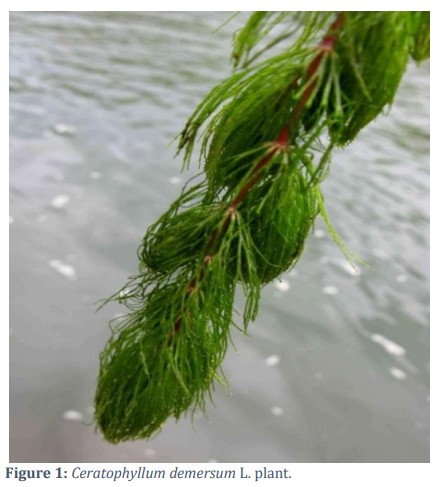
Figure 1 illustrates Ceratophyllum demersum L., commonly known as Coontail or Hornwort. As a rootless floating plant, this organism has inhabited the water bodies across the various aquatic ecosystems worldwide [17]. It is often classified as an invasive aquatic species due to its ability to cover vast areas of freshwater bodies, such as rivers and lakes. The plant’s rapid propagation and high abundance have led to various environmental concerns in both freshwater and wastewater ecosystems [15]. However, invasive plant species present significant potential for bioresource utilization due to several factors, including their high photosynthetic efficiency, fast growth rate, rich carbohydrate content, minimal land requirements, and lack of competition with food crops. The plant biomass is divided into lipids, proteins, and carbohydrates, with fermentable carbohydrate fraction capable of converting into liquid bioethanol [18].
Sunlight is one of the most abundant resources on Earth's surface. However, it is rarely considered as a primary solution to energy crises or as a "fuel" capable of improving air quality in urban areas. Thermodynamic principles indicate that the higher the temperature at which solar energy is utilized in a process, the greater the efficiency and effectiveness of the final output [19]. Solar energy is a clean and renewable energy source with the potential to drive environmental remediation and energy conversion processes. Consequently, utilizing solar-driven chemistry to address energy and environmental challenges appears to be a promising approach [20].
A steady supply of raw materials is essential for most power production methods, including electricity generated from conventional fuels or biofuels. While solar energy does not require any raw materials, advanced technologies are used to convert solar energy into usable forms. One of the various applications of solar energy is solar ponds, which provide a quick and inexpensive way to collect and store incident solar radiation. The most common type of solar pond is the salinity gradient solar pond (SGSP), which has a high storage capacity and can supply thermal energy year-round for various applications requiring low-grade heat [21].
Solar energy can also serve as a medium for biofuel production by supplying the necessary heat for processes like acid hydrolysis and fermentation. In this context, this study combines two renewable energy sources—solar energy and biomass energy from Ceratophyllum demersum—to produce clean and sustainable biofuels (bioethanol).
The primary aim of this research is to capitalize on natural resources, marking the first time biofuels have been produced using solar energy in Iraq.
Methods
Sample collection
The plant sample was collected from a freshwater estuary in Nasiriyah, Thi-Qar Governorate, Iraq, on September 13, 2022. The plant was washed several times with clean water to remove suspended particles and mud. After washing, it was spread on a white paper and dried for a week away from sunlight in a shady place.
Pretreatment
In this step, physical pretreatment was performed [22]. To obtain a fine vegetable powder for chemical operations, the dried plant was pulverized in an electric grinder to obtain a slightly greenish, brittle, fine, and lightweight powder. This process enables the complete conversion of cellulose to its amorphous form and makes it available for hydrolysis so that it can be easily attacked by hydrolyzed acid, making it suitable for fermentation [23].
Chemical composition of Ceratophyllum demersum L.
The chemical composition of the biomass of Ceratophyllum demersum L. was determined and reported in Table 1. The phenol-sulfuric acid method was used to determine the carbohydrate content [24]. Gusain et al., [25] method was used to estimate the total fat content. Finally, the total ash and moisture content were estimated using the Association of Analytical Communities (AOAC) method.
Solar thermal energy collection
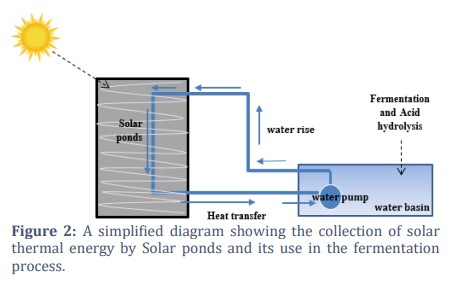
Thermal energy storage (TES) is one form of energy storage [26]. Solar energy was gathered using the Solar Pond technology, as shown in Figure 2. The assembly was procured and used at the College of Science, Department of Chemistry, University of Thi-Qar.
Acid hydrolysis
The Ceratophyllum demersum L. substrate 2.5% and 5% (w/v) (repeated twice, A and B) was then subjected to a saccharification process with the aim of obtaining glucose. Hydrolysis was carried out using a hydrochloric acid (HCl) catalyst for 48 hours. The saccharification process was carried out with variations in HCl concentrations (1M, 2M, and 3M). Solar thermal energy was used to provide the necessary heat for the acid decomposition process. The temperature reached 50°C during the day, with a slight drop during the night.
Fermentation
A 10% (w/v) inoculum of Saccharomyces cerevisiae was used to ferment the hydrolyzed product for 48 hours under solar thermal energy. Experimental conditions were applied with a pH of 6 and a temperature of 30°C [27], and it was observed that a hazy white sediment had formed at the bottom.
Results
C. demersum L. composition
The total carbohydrate content of C. demersum L. was approximately 44.1%, estimated using the phenol-sulfuric acid method (Cai et al., [23]), and shown in Table 1. This value reflects the amount of carbohydrates present in the sample, which are crucial for bioethanol production, as these carbohydrates can be converted into sugars that are fermentable into alcohol.
Solar thermal energy collection
Solar pond technology collected thermal energy in the range of 45°C to 55°C. Then this heat was transferred through a closed water path to another basin, where the processes of acid decomposition and fermentation took place, as shown in Figure 2.
Acid hydrolysis and fermentation
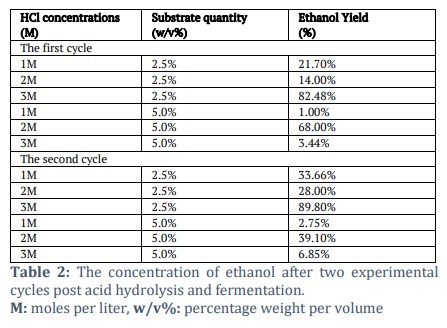
Saccharification was performed using different HCl concentrations. Table 2 shows the bioethanol production yields from different biomass concentrations and acid concentrations used during the acidic hydrolysis and fermentation process.
The higher bioethanol production in the first trial and from a 2.5% biomass concentration was about 82.48% at a 3M acid concentration. The second highest bioethanol production achieved from the first trial was 68.00% from a 5% biomass concentration at a 2M acid concentration. In the second trial, the highest bioethanol production was achieved for 2.5% biomass concentration which was 89.80% at a 3M acid concentration and second highest concentration of bioethanol was produced at 2M acid concentration and 5% substrate quantity which was 39.10%. The synthesis of bioethanol and fermentable sugars is affected by acid concentration and loading of biomass, as evident from the given results.
Figures & Tables
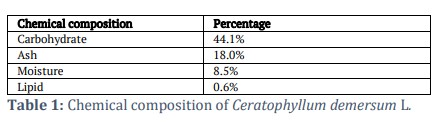
The research experiment confirms that C. demersum L. is a good lignocellulosic material for the production of bioethanol. With a high composition of carbohydrates of about 44.1%, the material is most appropriate for alcohol fermentation [28]. Apart from the generation of bioethanol, the aquatic plant has the potential for producing a range of liquid biofuels, placing it at the center of renewable energy development [15].
The efficiency of the renewable energy system is attested to by the thermal energy produced from solar pond technology at 45-55°C. The heat energy, circulated to a companion basin through a closed-loop water system, provides the best conditions for fermentation and acid hydrolysis – two key steps in the synthesis process of ethanol. Thermal energy greatly enhances saccharification, increasing the yield of the produced ethanol from the available carbohydrates. The solar-driven process not only promotes the sustainable generation of fuel but also reduces reliance on fossil fuels, showcasing the way renewable technology is capable of revolutionizing biofuel production.
The efficiency of the following biochemical process can be enhanced by carefully operating the mechanical process in biomass pretreatment. By breaking down the physical structure of the feedstock and increasing the surface area and pore sizes [16], the mechanical treatment prepares the biomass for more effective chemical and enzymatic reactions. Acidic hydrolysis further enhances the decomposition of cellulose and hemicellulose, releasing fermentable monosaccharides [29]. The results show that concentrated acid significantly increases the yield of fermentable sugars, which directly enhances bioethanol production [30]. The research establishes the existence of an inverse correlation between biomass quantity and efficiency in production. High substrate concentrations also inhibit acid-substrate interaction due to the reduction in available contact surfaces, thus the decrease in alcohol production. The results emphasize the requirement for the optimal feedstock levels for maximum alcohol yield in the process of conversion [31].
In short, efficient biomass processing, appropriate acid concentration, and solar thermal power interfacing are the three critical elements to optimize bioethanol production. If these elements are introduced in combination, they can significantly improve the yield of ethanol while facilitating renewable energy solutions.
Acknowledgement
The authors express their sincere gratitude to Dr. Husam M. Kredy for his continuous support and guidance throughout this project.
The researchers also extend their thanks to the Department of Chemistry, College of Science, University of Thi-Qar, for supporting the current project through the necessary facilities and equipment.
Author Contributions
Dmoua Kamil Hashim AL-Zaidi: Collected the samples, wrote and edited the manuscript, analyzed the data, and prepared the references.
Dr. Husam M. Kredy: Defined the research design and supervised the research.
The authors declare that there is no conflict of interest regarding the publication of this research.
References
- Devi A, Singh A, Bajar S, Owamah HI. Nanomaterial in liquid biofuel production: applications and current status. Environmental Sustainability, (2021); 4(2): 343-353.
- Oyegoke T, Owolabi OA, Bamigbala OA, Tongshuwar GT. Sensitivity Analysis of Selected Project Parameter on the Feasibility of Converting Maize Cob to Bioethanol as a Means of Promoting Biorefinery Establishment in Nigeria. International Journal of Renewable Energy Research (IJRER), (2022); 12(1): 259-272.
- Alalwan HA, Alminshid AH, Aljaafari HA. Promising evolution of biofuel generations. Subject review. Renewable Energy Focus, (2019); 28(2019): 127-139.
- Mahmud S, Haider AR, Shahriar ST, Salehin S, Hasan AM, et al. Bioethanol and biodiesel blended fuels—feasibility analysis of biofuel feedstocks in Bangladesh. Energy Reports, (2022); 8(2022): 1741-1756.
- Pfleger BF, Takors R. Recent progress in the synthesis of advanced biofuel and bioproducts. Current Opinion in Biotechnology, (2023); 80(2023): 102913.
- Anto S, Mukherjee SS, Muthappa R, Mathimani T, Deviram G, et al. Algae as green energy reserve: Technological outlook on biofuel production. Chemosphere, (2020); 242(2020): 125079.
- Maity S, Mallick N. Trends and advances in sustainable bioethanol production by marine microalgae: a critical review. Journal of Cleaner Production, (2022); 345(2022): 131153.
- Mat Aron NS, Khoo KS, Chew KW, Show PL, Chen WH, et al. Sustainability of the four generations of biofuels–a review. International Journal of Energy Research, (2020); 44(12): 9266-9282.
- Barampouti EM, Mai S, Malamis D, Moustakas K, Loizidou M. Liquid biofuels from the organic fraction of municipal solid waste: a review. Renewable and Sustainable Energy Reviews, (2019); 110(2019): 298-314.
- Ngoie WI, Oyekola OO, Ikhu-Omoregbe D, Welz PJ. Valorisation of edible oil wastewater sludge: bioethanol and biodiesel production. Waste and biomass valorization, (2020); 11(2020): 2431-2440.
- Vasić K, Knez Ž, Leitgeb M. Bioethanol production by enzymatic hydrolysis from different lignocellulosic sources. Molecules, (2021); 26(3): 753.
- Saengsawang B, Bhuyar P, Manmai N, Ponnusamy VK, Ramaraj R, et al. The optimization of oil extraction from macroalgae, Rhizoclonium sp. by chemical methods for efficient conversion into biodiesel. Fuel, (2020); 274(2020): 117841.
- Biose O, Maureen I, Oghosa A, Okorie C, Onabe J, et al. Bioethanol production from municipal solid waste: technical overview, progress and challenges. International Journal of Energy and Environmental Research, (2021); 9(3): 1–9.
- Duque A, Álvarez C, Doménech P, Manzanares P, Moreno AD. Advanced bioethanol production: from novel raw materials to integrated biorefineries. Processes, (2021); 9(2): 206.
- Whangchai K, Inta W, Unpaprom Y, Bhuyar P, Adoonsook D, et al. Comparative analysis of fresh and dry free-floating aquatic plant Pistia stratiotes via chemical pretreatment for second-generation (2G) bioethanol production. Bioresource Technology Reports, (2021); 14(2021): 100651.
- Anker Y, Nakonechny F, Niazov B, Lugovskoy S, Nisnevitch M. Biofuel production by fermentation of water plants and agricultural lignocellulosic by-products. MATEC web of conferences, (2016); 70(2016): 12005.
- Banunle A, Fei-Baffoe B, Miezah K, Ewusi-Mensah N, Jørgensen U, et al. Utilisation potentials of invasive plants in the Owabi dam in the Ashanti region of Ghana. BioResources, (2021); 16(2): 3075-3095.
- Amulya K, Morris S, Lens PN. Aquatic biomass as sustainable feedstock for biorefineries. Biofuels, Bioproducts and Biorefining, (2023); 17(4): 1012-1029.
- Steinfeld A, Palumbo R. Solar thermochemical process technology. Encyclopedia of physical science and technology, (2001); 15(1): 237-256.
- Hong J, Xu C, Deng B, Gao Y, Zhu X, et al. Photothermal chemistry based on solar energy: from synergistic effects to practical applications. Advanced Science, (2022); 9(3): 2103926.
- Sayer AH, Al-Hussaini H, Campbell AN. The utilisation of statistics to estimate evaporation from the surface of solar ponds. University of Thi-Qar Journal of Science, (2021); 8(1): 161-169.
- Niju S, Swathika M, Balajii M (2020) Pretreatment of lignocellulosic sugarcane leaves and tops for bioethanol production. Lignocellulosic biomass to liquid biofuels: Elsevier. pp. 301-324.
- Cai J, Wang Y, Liu J, Zhang X, Li F. Pretreatment enhanced structural disruption, enzymatic hydrolysis, fermentative hydrogen production from rice straw. International Journal of Hydrogen Energy, (2022); 47(23): 11778-11786.
- Tamboli FA, More HN, Bhandugare SS, Patil AS, Jadhav NR, et al. Estimation of total carbohydrate content by phenol sulphuric acid method from Eichhornia crassipes (Mart.) Solms. Asian Journal of Research in Chemistry, (2020); 13(5): 357-359.
- Gusain R, Suthar S. Potential of aquatic weeds (Lemna gibba, Lemna minor, Pistia stratiotes and Eichhornia sp.) in biofuel production. Process Safety and Environmental Protection, (2017); 109(2017): 233-241.
- Alva G, Lin Y, Fang G. An overview of thermal energy storage systems. Energy, (2018); 144(2018): 341-378.
- Silva G, Cerqueira K, Rodrigues J, Silva K, Coelho D, et al. Cultivation of microalgae Chlorella vulgaris in open reactor for bioethanol production. Phycology, (2023); 3(2): 325-336.
- Kusolsongtawee T, Wuttilerts T, Chulalaksananukul S, Maneechot L. Bioethanol production from Ceratophyllum demersum L. and carbon footprint evaluation. Applied Science and Engineering Progress, (2018); 11(2): 103-108.
- Rezania S, Oryani B, Cho J, Talaiekhozani A, Sabbagh F, et al. Different pretreatment technologies of lignocellulosic biomass for bioethanol production: An overview. Energy, (2020); 199(2020): 117457.
- Panakkal EJ, Sriariyanun M, Ratanapoompinyo J, Yasurin P, Cheenkachorn K, et al. Influence of sulfuric acid pretreatment and inhibitor of sugarcane bagasse on the production of fermentable sugar and ethanol. Applied Science and Engineering Progress, (2022); 15(1): 5238.
- Hong Y, Wu YR. Acidolysis as a biorefinery approach to producing advanced bioenergy from macroalgal biomass: A state-of-the-art review. Bioresource Technology, (2020); 318(2020): 124080.
This work is licensed under a Creative Commons Attribution-Non Commercial 4.0 International License. To read the copy of this license please visit: https://creativecommons.org/licenses/by-nc/4.0